On 28 January, France Musique announced Marilyn Nonken’s Métier recording, “Hugues Dufourt: L’Origine Du Monde”, was awarded the 2025 “Coup de cœur” from the Académie Charles Cros Contemporary Music Committee (les Coups de coeur 2025 musique contemporaine de l’Académie Charles-Cros).
Hugues Dufourt: L’Origine Du Monde marks the Métier label’s first “Coup de cœur” (Favorite) Contemporary Music Selection from the Académie Charles Cros. The distinction was awarded to eleven recordings from 2025.
Founded in the aftermath of World War II in 1947, the Charles Cros Academy defends musical diversity, ensures the preservation of sound memory, supports the creation, career development of artists, the entrepreneurial spirit and courage of graphic and phonographic publishers. It presents annual awards in the areas of French-language song, Jazz, Blues & Soul, Young audiences, Contemporary Music, Experimental Music, World Music and Recorded Speech and Sound Creations.
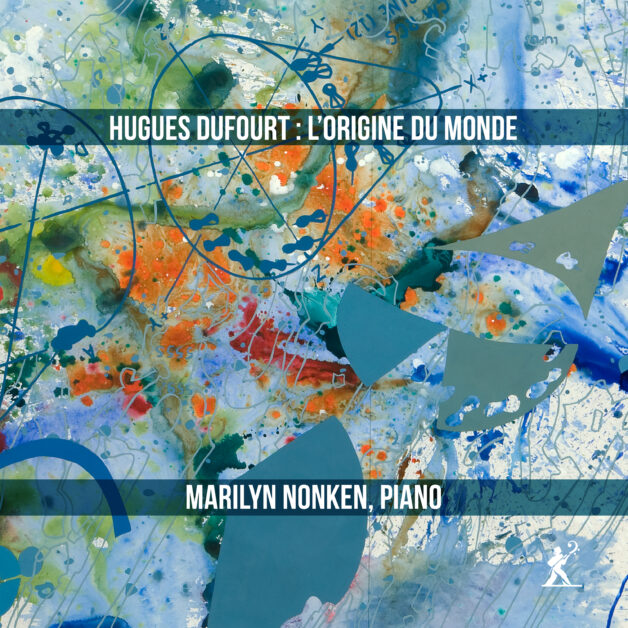
“Métier is excited to celebrate this award with pianist Marilyn Nonken. L’Origine Du Monde marked her third album exploring the spectral music movement, of which she is a leading interpreter. An award from this distinguished French Academy is all the more appropriate for this album of music by Hugues Dufourt, a foundational figure of the French spectral school. Métier and First Inversion thank the Académie for this recognition.” —David Weuste, First Inversion Executive Director
More Critical Acclaim for Hughes Dufourt: L’Origine Du Monde
“An excellent introduction to Dufourt’s piano works.” —Díapason
“highly controlled playing and ideal control of dynamics” —Laurent Bergnach, Anaclase
“Nonken plays virtuosically and makes the piano resonate…the challenge is worth it.” —Christoph Wellner, Klassik
“an exceptionally assured and spellbinding demonstration of Dufourt’s uncompromising creative ambtions” —Arnold Whittall, Gramophone
“L’Origine Du Monde…is a superb release. Like the best music…based on theory, his [Dufourt] compositions work. Most listeners will enjoy them… ” —Andy Hamilton, The Wire
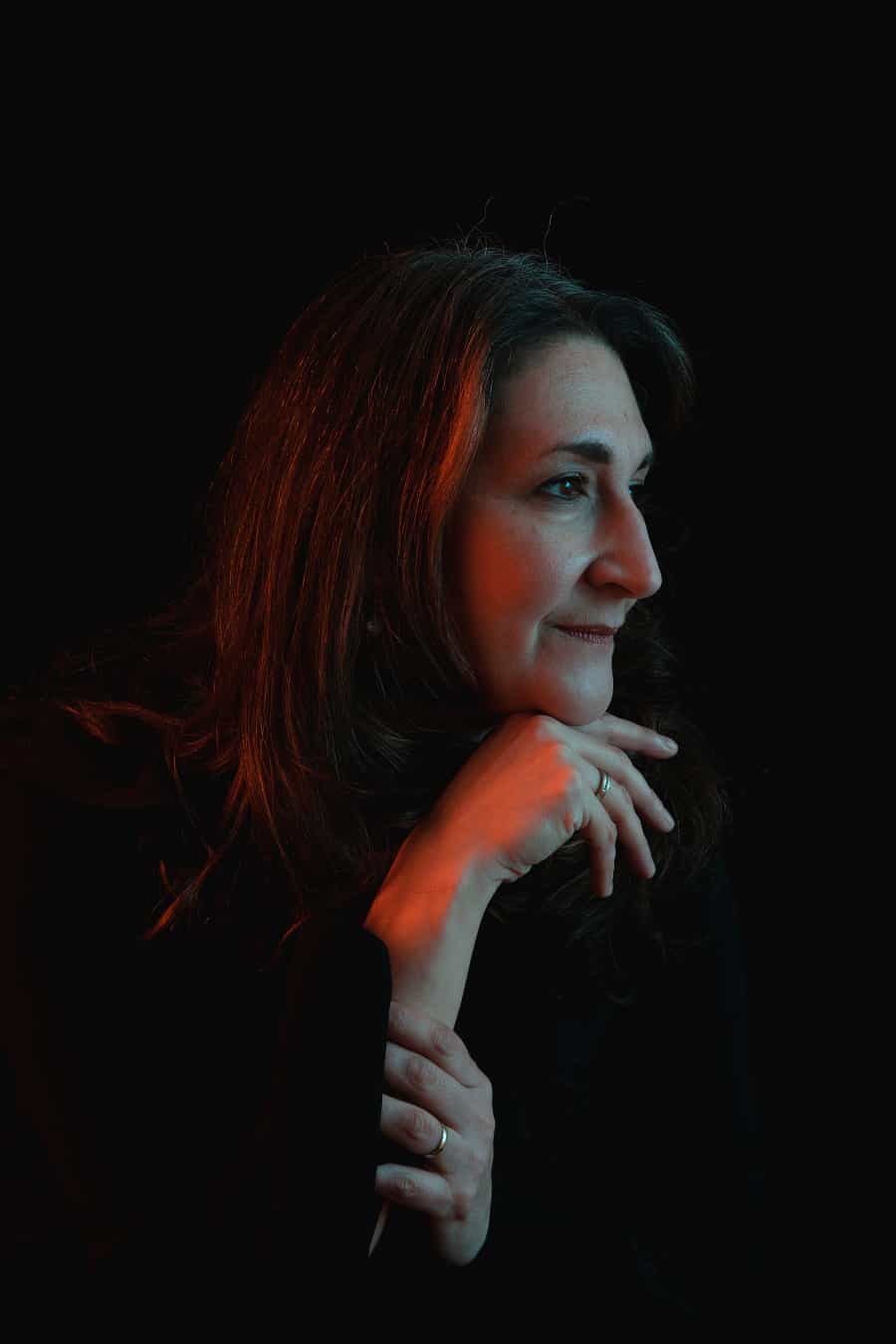
Marilyn Nonken
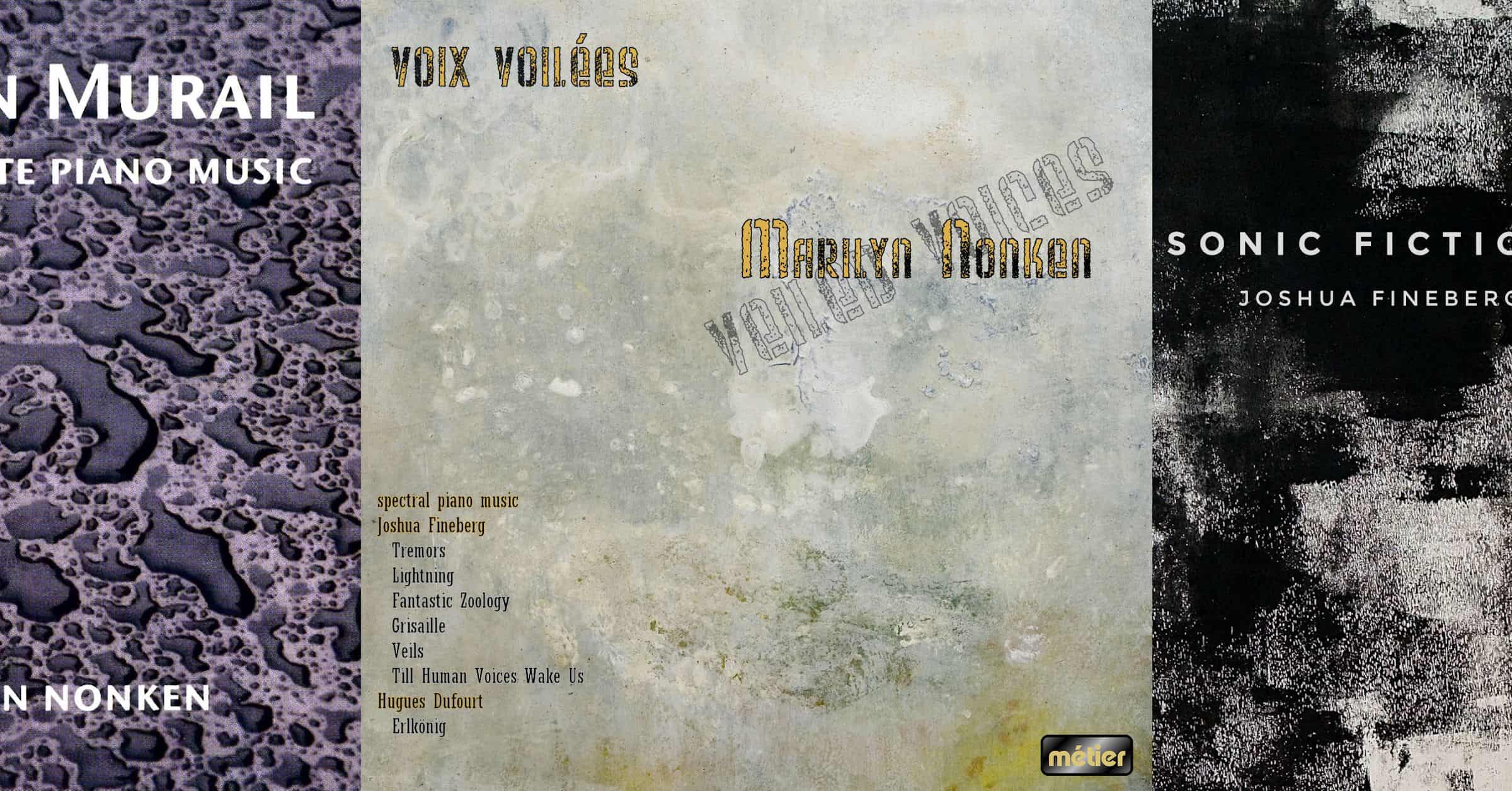
Upon her recital debut, pianist Marilyn Nonken was heralded as “a determined protector of important music” (New York Times). Since then, she has been recognized as “one of the greatest interpreters of new music” (American Record Guide). Writes Fanfare: “Her voicings are exquisite, her pedaling throughout is a model to be studied, and, when necessary, her virtuosity is equaled only by the insight and passion with which every piece is imbued.” A Steinway Artist, she has been presented at major concert venues and festivals around the world and has made more than 30 recordings for New World, Mode, Lovely Music, Albany, Metier, Hanging Bell, Harrison House, CRI, BMOP Sound, New Focus, Kairos, Tzadik, and Bridge. Her discography includes composers associated with spectral music, ultramodernism, the New Complexity, ragtime, and the New York School. With this recording, she completes her spectral trilogy for Divine Art/Metier, which includes Tristan Murail: The Complete Piano Music (MSVCD 92097, 2005) and 7 7Voix Voilées: Spectral Piano Music MSV 28524, 2012). Professor of Music and Music Education at New York University, Marilyn Nonken is also a musicologist who has written extensively on contemporary music and performance practices. Her writings include numerous articles as well as The Spectral Piano: From Liszt, Scriabin, and Debussy to the Digital Age (Cambridge 2014), Identity and Diversity in New Music: The New Complexities (2019), and “Hugues Dufourt and the Origins of His World,” which appears in The Oxford Handbook of Spectral Music (2022).
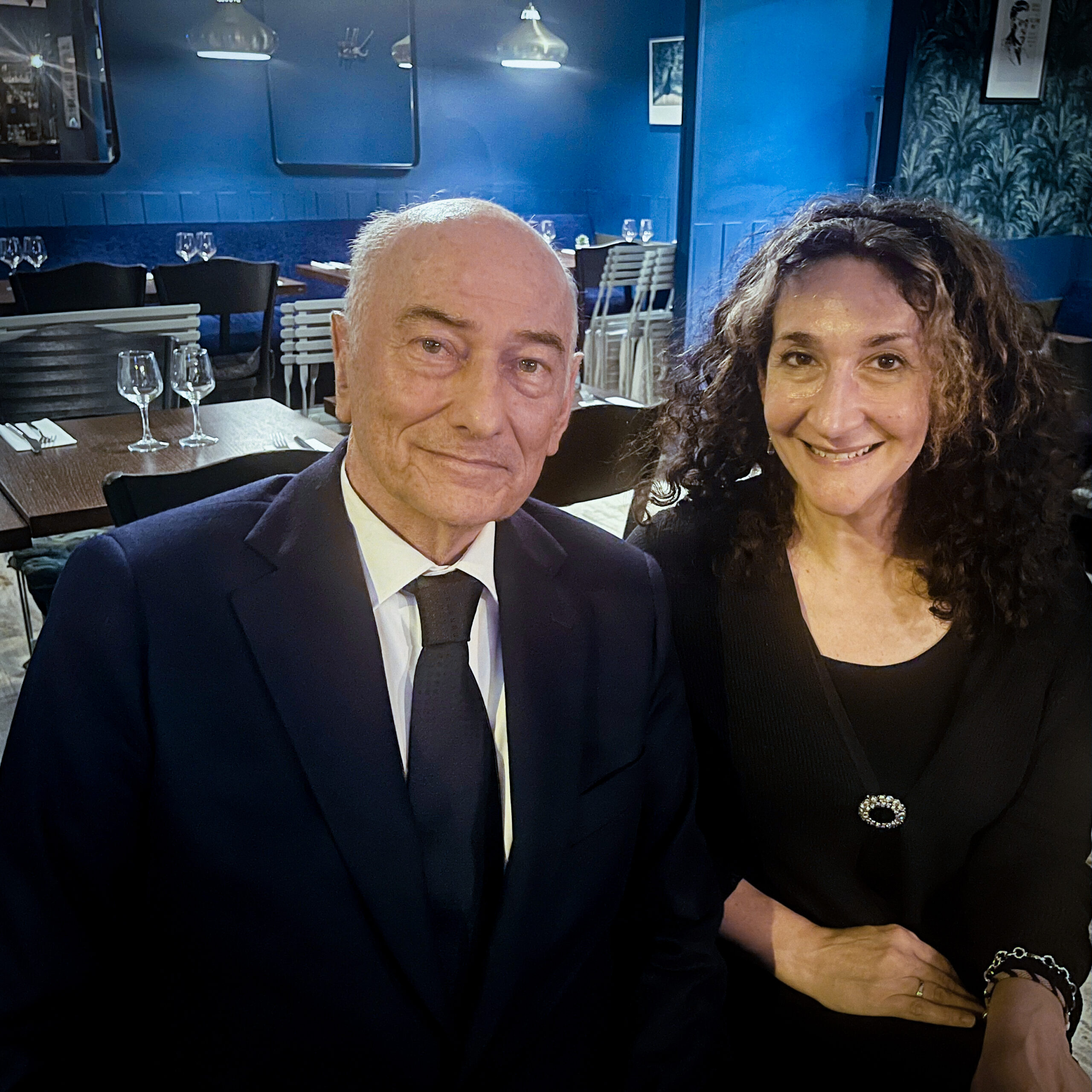
Jonathan Haas
Jonathan Haas is a conductor, orchestral timpanist, solo percussionist, teacher, and clinician acclaimed for his performances of Philip Glass’s Concerto Fantasy for Two Timpanists and Orchestra, which he commissioned and has performed seventy times worldwide. He is principal percussionist of the American Symphony Orchestra, principal timpanist of the New York Pops Orchestra at Carnegie Hall, principal timpanist of the Aspen Chamber Symphony, and percussionist of the American Composers Orchestra. Music Professor and Director of Percussion Studies at New York University, Jonathan Haas conducts the NYU Contemporary Music Ensemble, Aspen Percussion Ensemble, and JPC Percussion Ensemble, and teaches in the pre-college division at The Juilliard School. Having performed and recorded with Emerson Lake and Palmer, Aerosmith, Black Sabbath, The Who, and Zappa’s Universe, he is also known for his Hot Jazz Timpani performances, in combination with his nine-piece Latin/jazz ensemble Johnny H. and The Prisoners of Swing. With Ian Finkel, Haas is the author of Jazz Virtuostics for Timpani (Bachovich), a method book.
Hugues Dufourt
Hugues Dufourt (b. 1943) has always conceived of himself as a com poser-philosopher. He earned his first academic degree in philosophy prior to his studies at the Conservatoire in Geneva, where he worked with pianist Louis Hiltbrand, assistant to Dinu Lipatti (1961–68), and Jacques Guyonnet, as student of Pierre Boulez (1965–70). While organiz ing concerts of contemporary music in his native Lyon, Dufourt simultaneously pursued certificates in morality and sociology, psychology, history and philosophy, and philosophy and logic. In the 1970s, while producing concerts with the pioneering ensemble L’Itinéraire, Dufourt maintained strong ties with the people and ideas with which he engaged at the University of Lyon II. Collaborating with a host of ensembles and composing emblematic works that distilled the spectral attitude for first-generation audiences (Erewhon, Antiph ysis, Saturne, Surgir), Dufourt continued to pursue academic projects at the Centre d’Information et de Documentation “Recherche Musicale,” the École Normale Supérieure, the École des Hautes Etudes en Sciences Sociales, the Sorbonne, the Min istries of Culture and Education, and IRCAM, as well as the Centre National de la Recherche Scientifique. For his compositions ranging from solo works to full orchestra, Dufourt has received numerous awards, including the Prix du Président de la République in 2000 for his body of work, awarded by the Académie Charles Cros.