
MusicWeb International
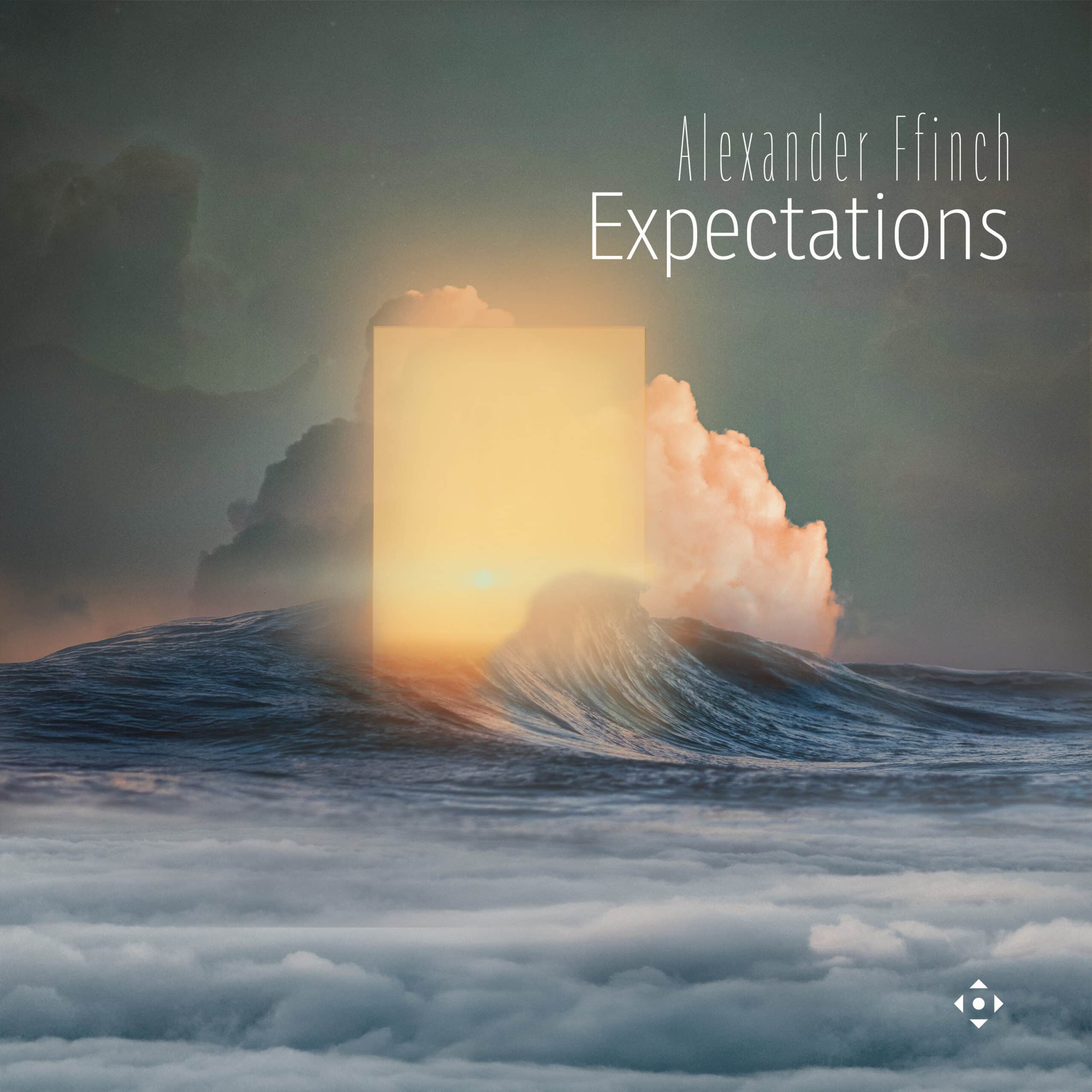
According to the advertising brief, Expectations “takes the listener through a journey of the autumn, winter feasts and festivals, and highlights the anticipation of opportunities and renewal in the new year”. Several pieces here are also appropriate for any season. For the purpose of this review, I shall set aside my usual unreasonable prejudice against organ transcriptions.
The recital opens with Edwin H Lemare’s idiomatic reworking of Camille Saint‑Saëns’s Danse macabre. This has long been a favourite symphonic poem, often played around Halloween. Henri Cazalis’s underlying verse depicted Death tuning his fiddle at midnight, summoning skeletons from their graves to dance until dawn breaks. Where the original relies on tritone‑laden violin lines and the rattle of xylophone “bones”, Lemare’s transcription uses the organ’s dynamic range to preserve the eerie narrative, with dramatic success.
There is nothing particularly wintry about Alexandre Guilmant’s Marche funèbre et chant séraphique. It comes from the collection Pièces dans différents styles, Book 3, op.17 (1864). The climactic funeral procession may well suggest the autumn of life that awaits us all. The roiling pedal part is impressive here; fortunately, the long-breathed seraphic song brings consolation.
No Christmas season would be complete without a performance of Tchaikovsky’s The Nutcracker, whether staged at the London Coliseum or the Birmingham Hippodrome. Ffinch plays satisfying arrangements of the Ouverture Miniature, Danse Russe ‘Trépak’ and the Danse de Mirlitons extracted from the Suite op.71a.
Explicitly seasonal is William Mason’s new composition Nun komm der Heiden Heiland, a “refreshingly colourful” take on the great Advent chorale.
Derek Bourgeois originally wrote Serenade op.22 as a bridal march for his own wedding. It swings with a playful, Caribbean‑style riff. It is now a staple of the brass band world, but translates surprisingly well to the organ loft. Similarly, one might wonder what is seasonal about the Air from Holst’s Brook Green Suite, but Ffinch’s arrangement evokes a pastoral mood suggestive of shepherds abiding in the fields.
Marcel Dupré’s Variations sur un Noël op.20 transform the traditional French carol Noël nouvelet into a stunning sequence of ten variations. Each explores a new technical challenge, from delicate filigree to a thunderous toccata. Often harmonically and chromatically wayward, it is difficult to bring off. Ffinch gives a marvellous account here. The “war story” behind this piece is that Dupré composed the work whilst travelling on trains in America during his Autumn 1922 tour.
In its original piano version, Fanny Mendelssohn’s cycle Das Jahr traces the unfolding of the entire year. Each movement captures the character, atmosphere and emotional weather of the months. Alexander Ffinch performs the final number (Epilogue or Postlude?) in his own arrangement. He describes it as a “stark yet optimistic depiction of the stroke of midnight on New Year’s Eve in the 1840s”. The ghost of Bach is not far away in these pages.
Since first hearing David Bowie’s Space Oddity back in 1969, I have been a fan of this influential musician. Remarkably, his career was a constant reinvention – from Mod singer to Psychedelic and Glam trailblazer, and later into Jazz and Art Rock. He never ceased to surprise and entertain. Ffinch plays his own transcription of Bowie’s surreal and defiant Life on Mars? taken from the Hunky Dory album. It makes a fitting tribute to the tenth anniversary of the legendary singer’s death.
Marcel Lanquetuit, born in Rouen, became Marcel Dupré’s first pupil. Starngely, he was eight and Dupré was a “grown up” fifteen-year-old. Lanquetuit would become his teacher’s assistant at Saint-Sulpice in Paris before returning to Rouen in 1937 as cathedral organist. He remained in that post until his retirement in 1978. Despite his high-profile appointment, he has remained “under-acknowledged” as a contributor to the French symphonic organ tradition. One reason is that much of his performance was improvisation, not recorded or transcribed. Another is that many of his scores were destroyed in a house fire in 1940.
Two singular pieces have survived. The Intermezzo is impressionistic, with varying moods and eclectic harmonic progress. Dozens of married couples reflexively demand Widor’s Toccata for their weddings; it is a pity that one or two do not choose Lanquetuit’s Toccata. It has everything of the elder composer’s magnum opus: rapid figurations, bold harmonic surges and a jubilant final ascent which concludes this exhilarating composition.
The three manual and pedal organ at the Cheltenham College Chapel was originally built by Norman and Beard in 1897. It was rebuilt by Harrison and Harrison in 1930, with additions in 1976. In 2013, a 32-foot Double Ophicleide pedal stop was added. A major overhaul followed in 2017: the console, soundboards, wind system and pipework were removed for cleaning, re‑leathering and restoration, and a new piston system was installed. A complete specification of the current instrument appears in the booklet.
The liner notes provide a variable assessment of the recital. Some works are virtually ignored; others have a detailed non-technical analysis. The booklet is beautifully illustrated but sadly includes a photo of the organist wearing a baseball cap inside the Chapel.
Alexander Ffinch’s superb playing is characterised by conviction and talent. This thoughtfully designed programme justifies its title, and offers a rewarding journey through the darker months toward the light.

@divineartrecordingsgroup


