
Fanfare
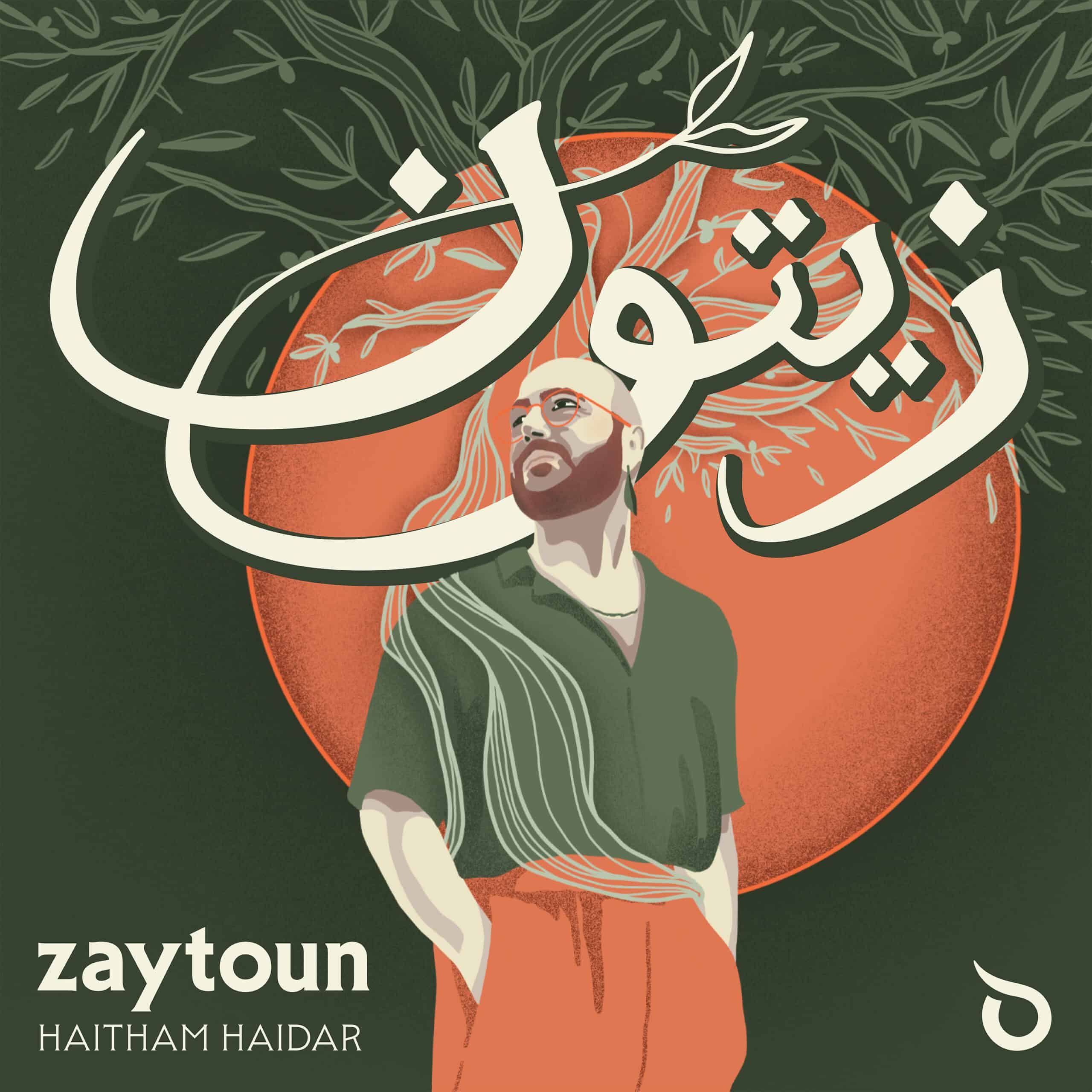
Zaytoun is the Arabic word for olive or olive tree and symbolically stands for peace and endurance. For his debut recital, Canadian tenor Haithan Haidar, who is of Lebanese-Palestinian extraction, has created a remarkably diverse program. He says in his informative program notes that he struggled for some time with the duality of his identity. “Though I trained my voice in one genre, my heart felt like it belonged to another. Though I was carving out a life on a different continent, my heart belonged somewhere else. Zaytoun … joins the heart and soul of my Arabic roots with my love and dedication to Baroque music.” Haidar’s light, lyric tenor is used with great sensitivity and delicacy.
After choosing the program and carefully arranging its order, Haidar determined on a unique instrumentation, which adds an oud to an ensemble of archlute, harpsichord, Baroque violin, and Baroque cello. He includes three spoken excerpts from Khalil Gibran’s famous book, The Prophet(Gibran was Lebanese-American), which Haidar reads with great sensitivity to the delicate accompaniment of the oud. This entire disc can be taken as an artist’s urgent plea to humanity to see our similarities and stop battling over our differences. The last line of Haidar’s booklet note underlines the point: “Perhaps Zaytoun can remind us that in our differences we are very much alike.”
The most moving track for me was the aria “Erbame dich” from Bach’s St. Matthew Passion, sung here in Arabic. It is amazing how well the music fits the Arabic language. Often when vocal music is sung in translation, the musical line doesn’t move smoothly. That is not the case here. The first four songs on the program include two by Monteverdi, which enclose a pair by the Egyptian composer Sayed Darwish (1892–1923). The flow between them is completely natural, despite the differences in their eras and nationalities.
The final song is the traditional Palestinian “Ya Taleen,” explained by Haidar in this way: “For decades, Palestinian women stood by where their husbands, fathers, brothers, and sons were held captive. They started singing this song to give their men hope and faith that they will be freed one day.” The particular arrangement used here is for five voices and cello; through multi-tracking Haidar sings all the voices.
Throughout the recital I was struck by the depth of feeling in Haidar’s singing, as well as the smooth flow of his lyricism. This disc is clearly much more than the typical calling card. It is an extraordinarily thoughtful program performed with beauty and sensitivity. The accompanying instrumentalists are all excellent, particularly violinist Tanya Laperrière in her obbligato in the Bach. The recorded sound is natural and well balanced. The inclusion of texts and translations is one more plus among many. Recommended with enthusiasm.

@divineartrecordingsgroup


