






Anatomy of an Unknown Man
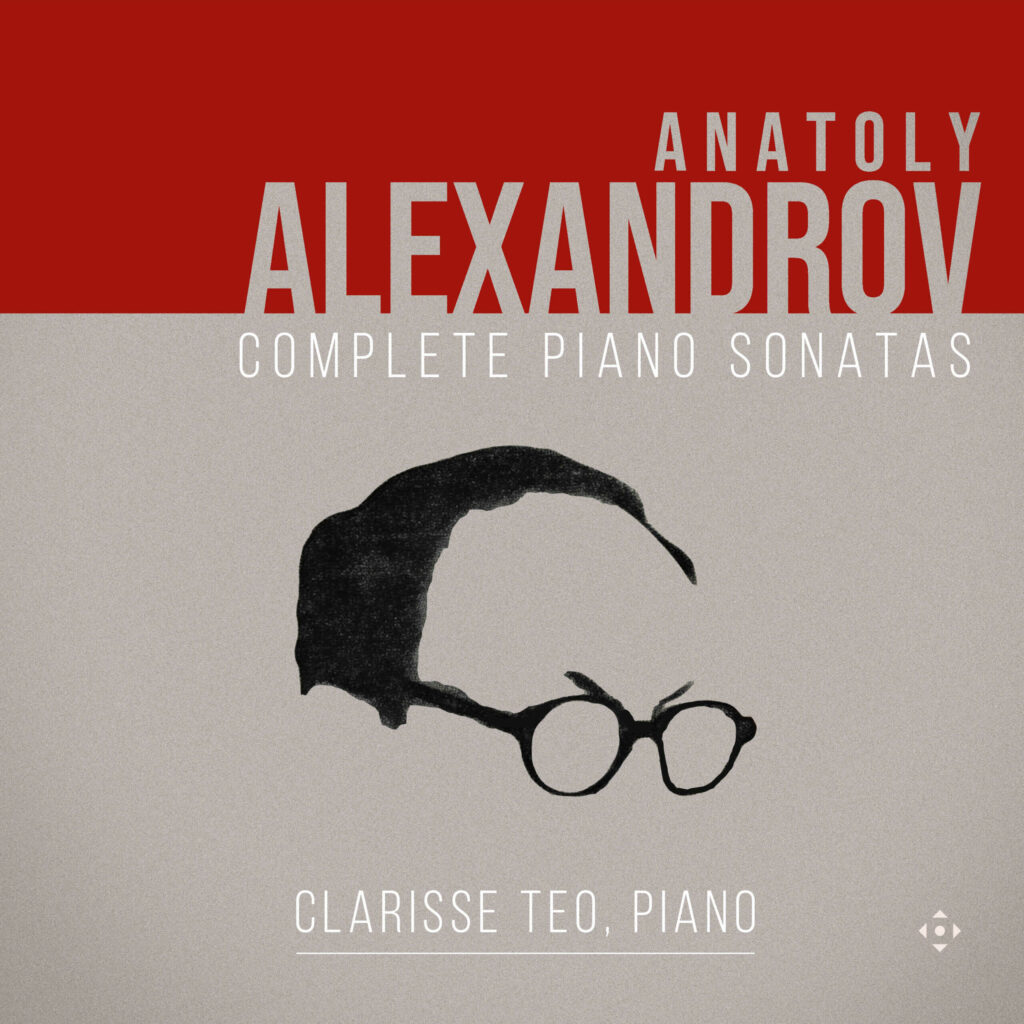
Aside from a handful of recordings by Victor Bunin released on LP by Melodiya and various partial releases on labels such as Hyperion, Toccata, and Caro Mitis, the discographic record dedicated to the Moscow composer Anatoly Alexandrov (1888–1982) is as meager as our knowledge of his work. In this regard, this much-appreciated triple CD from the Divine Art label not only remarkably fills certain gaps but also sheds light and provides a diachronic perspective on the musical thought of Alexandrov, a musician not particularly attached to the avant-garde, within the context before and after the Russian Revolution. Furthermore, this edition also exemplifies a way of approaching the interpretation of music that, apart from a couple of symphonies and a piano concerto, expands into song cycles and, above all, a varied piano corpus, from which the cycle of fourteen sonatas, composed between 1914 and 1915, stands out. 1971.
With a hermeneutical approach, Singaporean Clarisse Teo presents this cycle as one of the most significant contributions to Soviet piano music, especially since socialist realism favored simpler music with a more defined semantics, as opposed to abstract formulations like sonata form, which Alexandrov considered the best vehicle for expressing his organic musical signature. Drawing from contradictory aesthetics, the Russian-Soviet musician combines the melodicism of Rachmaninoff and the canonical romanticism of Taneyev or Medtner (with whom he frequently debated his futurist romanticism) with a certain post-Criabinian expressionism that alternates with refined neoclassical creations in his Sonatas Nos. 1 to 7, praised in their time by Myaskovsky. Stripped of more exaggerated chromaticism and elaborate ornamentation, the Apollonian central Sonatas, Nos. 8, 9, and 10, are characterized by their more refined neoclassical style. Ten of the Sonatas reach a certain forward-thinking compromise with the established style by adding folkloric references and a more austere rhythmic gesture. The hazy sound of Sonata No. 11, Sonata-Fantasy, draws us into a personal post-impressionism, rich in meandering developments, which looks back to the Scriabin of his youth before launching into a chromatic and synthetic future in which he adopts simpler structures, as seen in the more turbulent Sonata No. 12, the brief and stylized Sonata No. 13, and the bipartite and final Sonata No. 14.
With a convincing, well-articulated technique, broad Romantic phrasing when needed, and a clear yet warm textural clarity in the more chromatic passages, Clarisse Teo establishes herself as an authority on works that, from the 21st century onward, she has made her own, placing herself above the South Korean composer Kyung-Ah Noh in the selection of early sonatas. recorded in Toccata, and on par with a more urgent Hamish Milne in his atmospheric Hyperion recording of Sonatas Nos. 3 and 4, although Teo offers versatility, a broader perspective, and the benefit of a recording with greater definition and spatialization.