
Textura
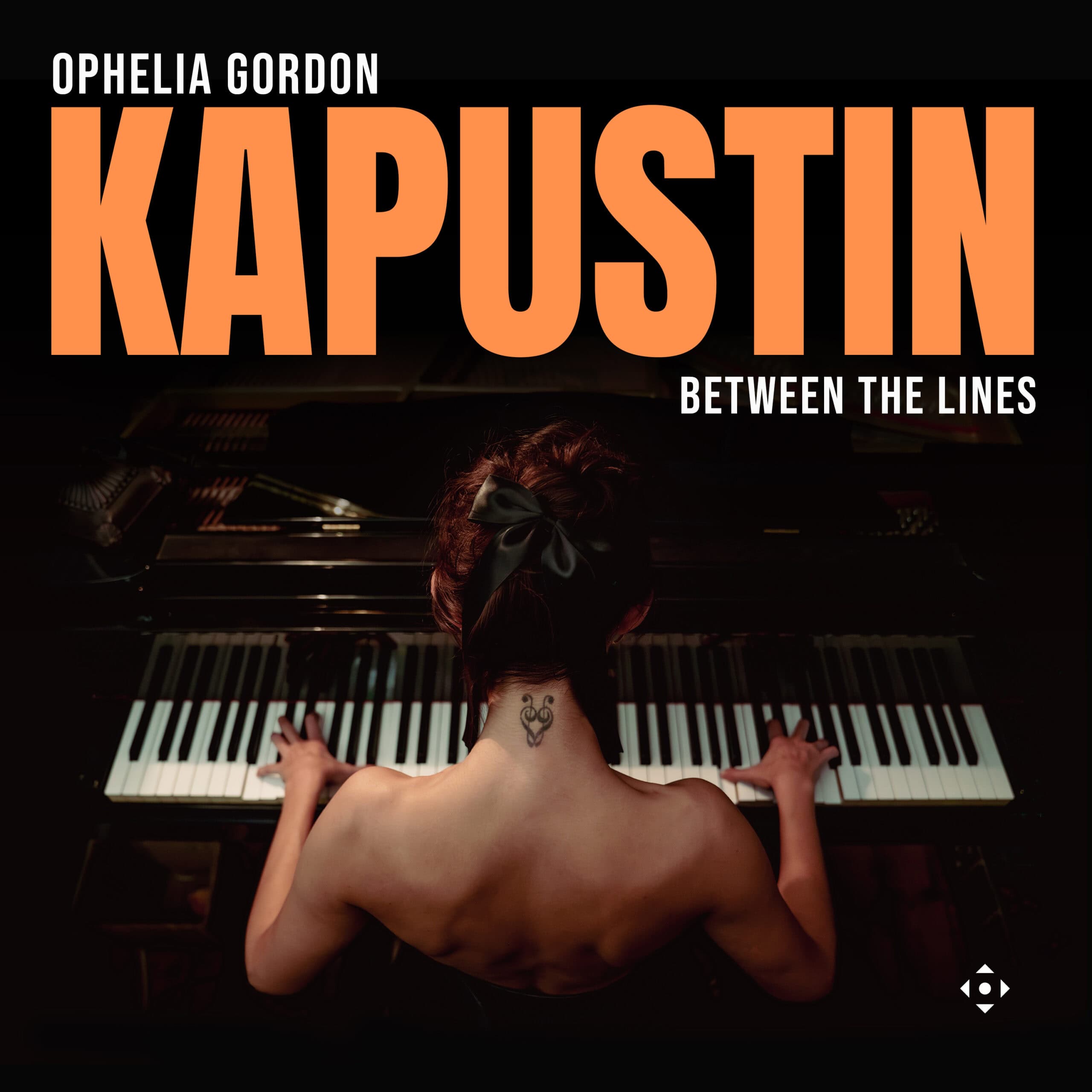
Many classical composers have woven jazz into their works—Gershwin, Stravinsky, and Bernstein come to mind—but this solo piano collection of material by Ukrainian composer Nikolai Kapustin (1937–2020) takes the idea to the extreme. Performed with breathtaking verve by British pianist Ophelia Gordon, Kapustin: Between the Lines collapses whatever boundaries exist between the genres when the material, as notated as it is, exudes the boundless exuberance of jazz. That it’s Gordon’s debut album frankly boggles when the technique showcased throughout is so extraordinary. While jazz pianists from Art Tatum and Oscar Peterson to Bill Evans, Chick Corea, and Herbie Hancock are referenced in the liner notes, Gordon’s dynamic playing—on this collection, at least—gravitates more in the direction of Tatum and Peterson than ones more inclined to minimalism and understatement.
She’s an alumnus of the famous BRIT School who studied music outside classical before undertaking her Master’s studies (she’s also currently on faculty at Alleyn’s School). Growing up in a musical family, Gordon attended Durham University and City University London and has worked as a pianist since graduating. Currently enrolled at Trinity Laban Conservatoire, she received her formal training in classical music while being exposed to jazz at home and artists such as Oscar Peterson, Courtney Pine, and Bill Evans. Her attraction to Kapustin’s music was immediate, in large part because his material, while formally classical, incorporates the infectious drive of jazz. It’s meticulously notated, yes, but its vitality and excitement give it the electricity of an improvised performance. Kapustin was nominally a classical composer (he’s credited with over 160 works, including sonatas, concertos, and solo piano pieces), but the presence in his music of swing, jazz harmony, and blues inflections gives it its distinctive character.
Recorded on a 1961 Steinway Dat Trinity School, Croydon in December 2024 and April 2025, the album couples two piano cycles, Concert Etudes, Op.40 and 24 Preludes in Jazz Style, Op.53 (from which Gordon selected eight), with four standalones. The first, a personal favourite of Gordon’s and originally written for big band and piano, Big Band Sounds, Op.46 is no less striking in this solo piano treatment, especially when she digs so fervently into its swinging rhythms and jazz harmonies. The authority with which she plays makes for performances that are consistently dazzling and jaw-dropping, and the clarity with which her playing’s captured is a credit to the album’s production team. The tone set, Gordon moves on to selections from 24 Preludes in Jazz Style. Ranging widely, the eight segue between jazz-inspired expressions that are soulful, lyrical, blues-drenched, and vibrant. Whereas the poetic elegance of “No.5 in D Major” calls Evans to mind, the swaggering B Major eleventh is steeped in blues and soul (Gordon’s nickname for the piece “Ray” could refer to Bryant but also Charles) and the A-flat Major seventeenth works stride into its glorious presentation (“Oscar” presumably alluding to Peterson). As rousing are the soulful “No.19 in E-flat Major” and rhapsodic “No.23 in F Major.”
Gordon channels the introspective splendour of Evans and Jarrett in a probing examination of Contemplation, Op.47 before turning to a riveting rendition of Kapustin’s Paraphrase on ‘Aquarela do Brasil,’ for Piano, Op.118. Based on Ary Barroso’s 1939 “Brazil,” the piece found Gordon playing along with a samba beat to lock into the infectious groove. Arguably Kapustin’s best-known set of pieces, the eight-part Concert Etudes is next, with the music advancing from the towering dynamism of the “Prelude” to the suitably intoxicating “Reverie,” rapturous “Reminiscence,” and enticingly playful “Pastoral.” Boisterous episodes appear too, the bluesy, boogie-woogie-inflected roller coaster “Raillery” and furious “Finale” particularly memorable. As if what precedes it isn’t dazzling enough, Gordon caps the release with a spellbinding take on Paraphrase on Dizzy Gillespie’s Manteca for two pianos, Op.129 that involved her recording both parts, the rhythm part first and the melodic material second.Gordon states, “I dream of a world where classical and jazz musicians can perform side by side, with no gatekeeping or barriers.” For her, Kapustin makes that dream a reality when it positions itself seamlessly between genres, and she’s entirely correct in pitching the release as “a celebration of that in-between space—where rhythm dances with form, where freedom and structure meet, and where labels fall away.” As debuts go, Kapustin: Between the Lines is, frankly, stunning. Hearing her confidently roll through one challenging setting after another as if it’s the easiest thing in the world makes for an exhilarating ride.

@divineartrecordingsgroup


