
BBC Music Magazine
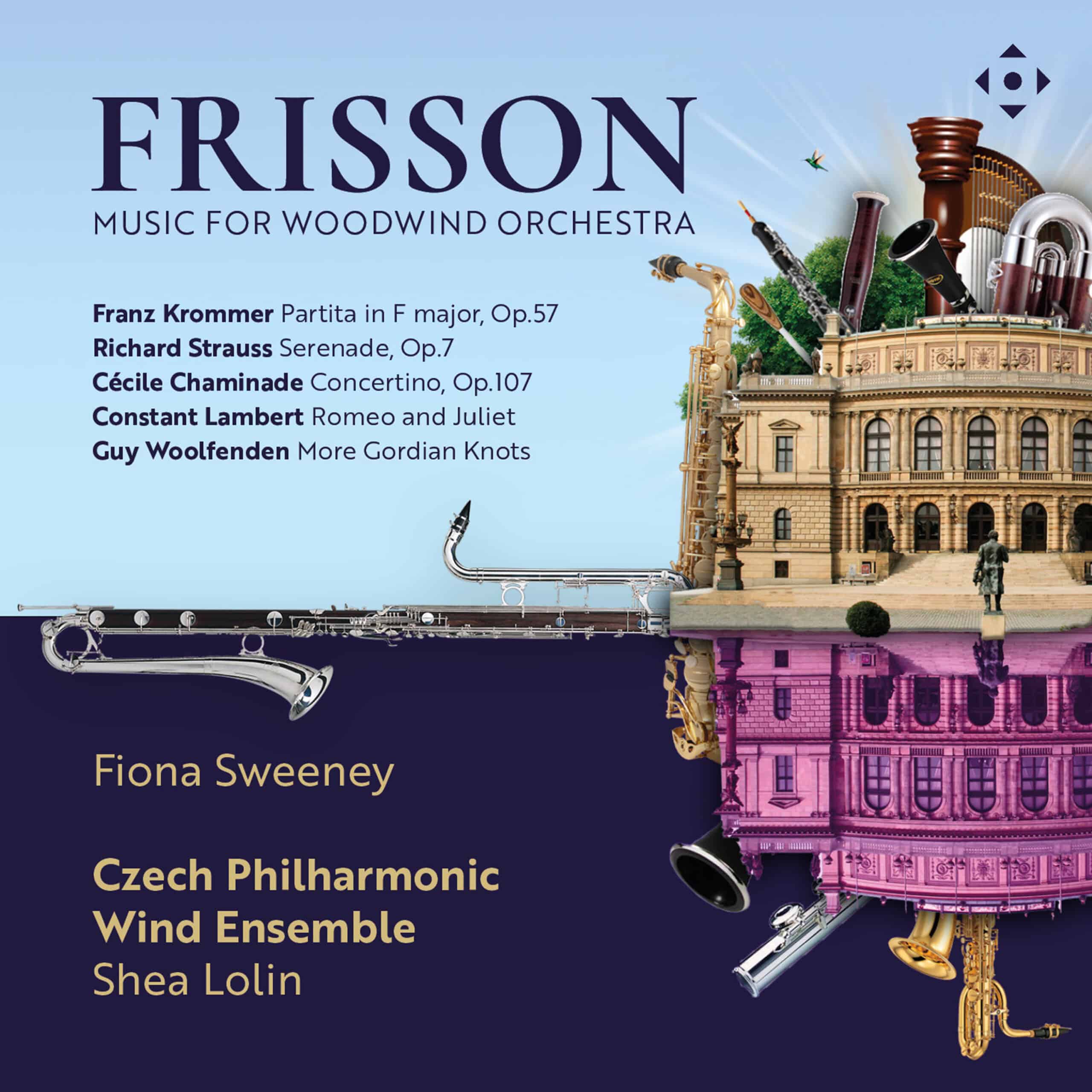
Although the album artwork highlights Scottish flautist Fiona Sweeney, Frisson is less a flute showcase and more a celebration of the brilliance of the wind ensemble as a form.
Sweeney’s principal moment comes in Chaminade’s Concertino, a single-movement staple of the flute repertoire known for its passionate cadenza and technical demands. She shines, presenting long melodic phrases with a charming tone and rarely breaking lines for breath. The ensemble remains tightly synchronized, delivering crystal-clear entries and unified articulation.
That synchronicity defines the Czech Philharmonic Wind Ensemble throughout the collection. With a title like Frisson, one expects lightness and excitement — and that is delivered in abundance. The rich recorded sound lends immediacy, with lower winds providing a supportive bass while preserving the delicacy of higher instruments, particularly in Franz Krommer’s Octet.
The programme offers surprises. Constant Lambert’s ballet Romeo and Juliet, originally taken up by Diaghilev’s Ballets Russes in 1926, is less well-known than its origins suggest. The players relish its vibrant syncopation and melodic interplay. In Guy Woolfenden’s Purcell-inspired More Gordian Knots, a darker tone emerges, with a Chaconne building toward densely woven textures.

@divineartrecordingsgroup


