
MusicWeb International
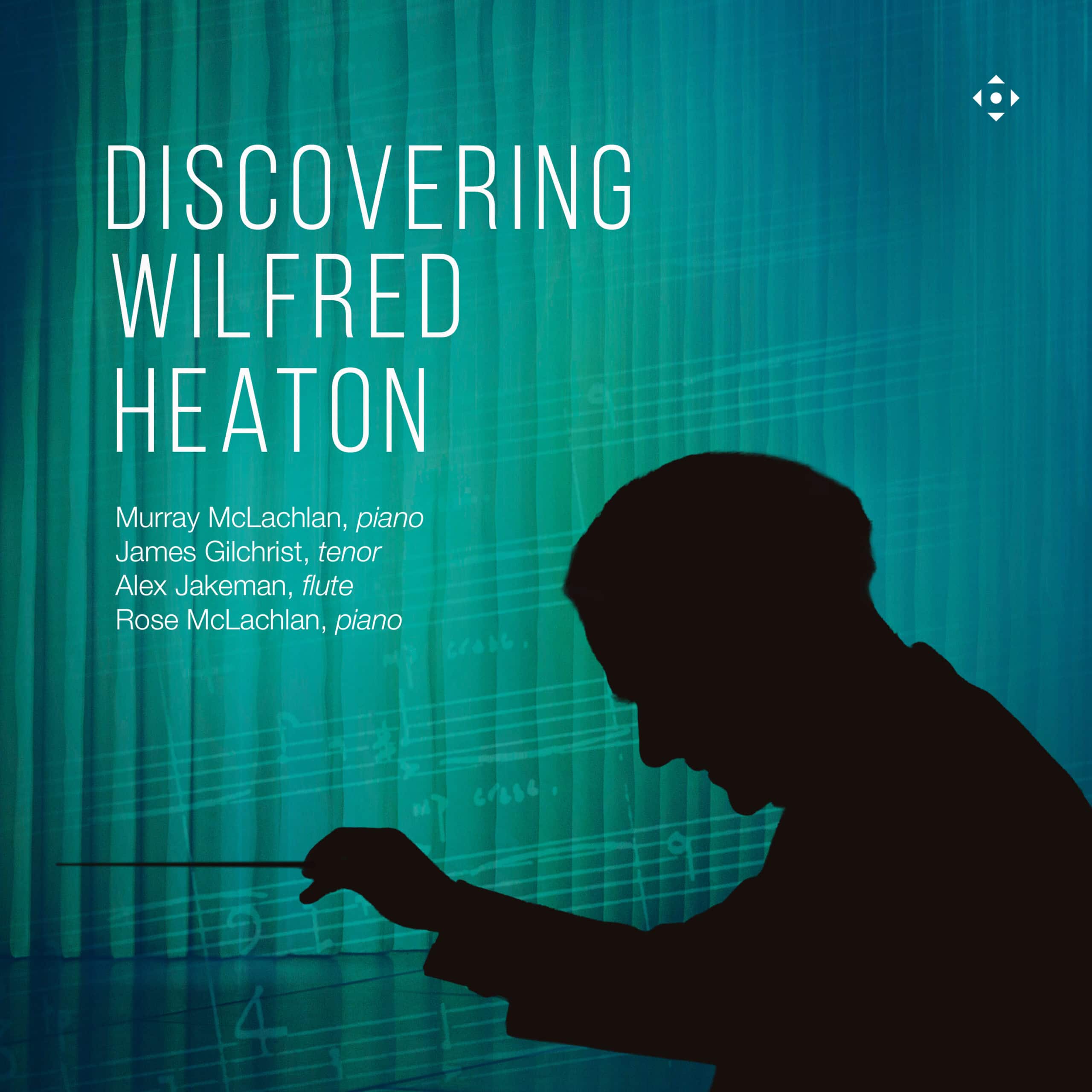
Prior to receiving this disc for review I had not heard any of the music of Wilfred Heaton. That might not have been the case if I were more familiar with the brass band repertoire. Happily, in the past some of my colleagues have covered a number of recordings of Heaton’s brass band music. I would commend particularly a review by Gary Higginson of a double album of Heaton’s brass band music. Like me, Gary was unaware of Heaton’s music until he received that set. You will find in his review not only an appraisal of the various pieces but also a good deal of very valuable background information about the composer. There’s also an equally valuable review by Christopher Thomas of another disc in the same series of Heaton discs. The reviews by Gary and Christopher are from a series on the SP&S label. When gathered together, the label’s set ‘The Heaton Collection’ encompassed no fewer than six CDs; that gives an indication of how significant was Heaton’s contribution to the medium. Nick Barnard encountered Heaton’s Partita on a mixed disc of music for brass band; I noted that he regarded it as “a powerful and impressive discovery”. The positive reactions of both Nick and Gary to the Partita are highly relevant to one of the works on this present disc, as we shall see.
Wilfred Heaton had quite an unusual background, which is worth summarising. Such knowledge as I have is derived from the excellent, extended booklet essay by Paul Hindmarsh, who has written the composer’s biography and who has done much to make Heaton’s music more widely available. Heaton was born in Sheffield, into a working-class family. His parents were members of the Salvation Army (SA) and, indeed, his father was the bandmaster at the local SA citadel. Wilfred learned the piano from an early age and, I infer, was quite a good player. As Hindmarsh puts it, “[t]hroughout his childhood and teenage years the Sheffield Park SA was the centre of this gifted young musician’s musical experience and the inspiration for many of [his]’classic’ band pieces”. He had to leave school at 14 but he was able to continue his musical education. He earned his living by repairing brass instruments and, presumably, in due course that paid for him to expand his musical horizons significantly: at the age of 30 he went to London for some lessons from the composer Mátyás Seiber. Hindmarsh lists a number of other composers whose music influenced Heaton: Bach and Beethoven (“his heroes”); also, Walton, Hindemith, Bartók, Stravinsky, Sibelius, Elgar and Webern.
From about 1949 Heaton came under the influence of Rudolf Steiner’s Anthroposophical movement and he was closely associated with the Sheffield Educational Settlement, an organisation which based its work on Steiner principles. Aspects of the Steiner principles were very much at odd with SA doctrines and this caused, in Paul Hindmarsh’s words, “a decade-long rift” from the SA. By the mid-1950s Heaton, now married and with a family to support, began to work as a professional horn player because he could no longer make money from repairing brass instruments. In 1963 he began a career as a full-time teacher; this lasted for the next 20 years. He combined his teaching with a number of conducting posts including, for a brief period, as Musical Director of the Black Dyke Mills Band. I have only given the barest bones of Wilfred Heaton’s life in these two paragraphs, picking out from Paul Hindmarsh’s comprehensive essay what seem to me to be the key facts, but I’m conscious that I’ve only scratched the surface of this unusual musical life. Sadly, it seems that his compositional activities decreased from the middle of the 1950s; it appears that composition resumed in the 1970s, but not at the earlier level. That said, Paul Hindmarsh has told me that in the 1980s and 1990s the trumpeter and conductor Howard Snell encouraged Heaton to recast his orchestral works and sketches from the 1950s into major works for brass band.
The present disc includes some songs by Heaton; these are performed by James Gilchrist and Rose McLachlan. If I read Paul Hindmarsh’s essay correctly, Heaton composed just eight songs in total; six of which are included in this programme. The Two Morning Songs comprise ‘The Dove’s Answer’ (WH61) and ‘Hay Harvest’ (WH57). These were composed around 1935, when he was about 17 years old. The former is a setting of a poem by Jean Ingelow (1820-1897); the latter sets lines by Patrick Chalmers (1872-1945). ‘The Dove’s Answer’ is light and airy, with an attractive melodic line which James Gilchrist delivers with his customary expressiveness. ‘Hay Harvest’ is also attractive; the music has an appealing compound-time lilt. With Empty Hands, WH62 was written at about the same time. The text was written specifically for Heaton to set by Albert E Mingay (1908-2003), who was the pastor of Heaton’s SA citadel between 1936 and 1937. I fear that the way that the religious sentiments of the text are expressed may limit its appeal to singers. If I’m honest, I found the main musical interest in this song lay in the piano accompaniment, even if the piano writing is a bit overdone – apparently, the composer himself admitted to “an acute bout of Debussy-i-tis”. The piano part certainly keeps Rose McLachlan busy; her playing is delightful.
With Empty Hands is a product of Heaton’s early involvement with the Salvation Army. By contrast, the Two Love Songs were composed during the time when Heaton was involved with the Sheffield Educational Settlement. ‘O Fortune’ was part of Heaton’s musical contribution to a 1951 production of Christopher Fry’s The Firstborn. The singer is unaccompanied so the vocal line lacks a harmonic context. Nonetheless, even when one hears only a melodic line it’s evident that Heaton has advanced quite markedly from the easy melodiousness of the three early songs. ‘The Chief Glory’ was written for a production, in English translation, of El Mágico Prodigioso(The Mighty Magician) by the Spanish playwright Pedro Calderon de la Barca (1600-1681). Paul Hindmarsh believes that Heaton himself would have improvised an accompaniment for this song; on that basis, he has, as he puts it, “ventured one of my own, adding what I hope is an appropriate Spanish flavour”. The song as heard here confirms the impression of compositional progress; the vocal line is melismatic and I think Hindmarsh’s accompaniment works well.
The final song in this collection is Welcome for Me. This song, which dates from October 1970, marks a musical return to Heaton’s SA roots. It sets a poem by the American gospel poet Fanny Crosby (1820-1915). By comparison with With Empty Hands, the music shows, as you’d expect, much greater musical maturity. Indeed, I wonder if Heaton’s music, and his harmonic language in particular, truly ‘fits’ the rather cosily expressed religious sentiments of the poem. Candidly, none of these six songs set my pulse racing. Part of that reaction may be due to what I perceive as the poor quality of the poetry that he set – other listeners may appreciate the texts more. It’s interesting to hear the songs, though, and the performances are excellent. However, there are greater musical rewards elsewhere in this programme.
The Little Suite was composed for recorder or flute and piano. The music was written in 1955 but, so far as is known, it was not performed until 2001, when the recorder player, John Turner and pianist Keith Swallow played it. Turner has made two recordings of the work, once with piano and once in an arrangement involving string orchestra. Here, the flute version is given what may be its first recording. There are five short movements which, in total, play for just short of nine minutes. Paul Hindmarsh comments that the Suite consists of “five cameos drawing on the spirit of the baroque dance suite” and he suggests that Heaton’s “contemporary exemplar” was probably Hindemith’s Ludus Tonalis. The first two movements have a light character – though they are not ‘light music’. The third, which is the longest, is serious and melancholy. There follows a light, pithy dance and then the Suite is wrapped up with a concluding Presto, which is energetic and rhythmically challenging. Little Suite is an engaging and accomplished work which here receives an excellent performance from Alex Jakeman and Murray McLachlan.
Among the instrumental pieces, the Three West Indian Melodies are the lightest in character. The three pieces take only some six minutes to play. They originate, it seems, from Heaton’s teens when he was often invited to visit other SA centres to play piano and/or cornet solos. When he played his cornet his sister Hilda would accompany him on piano and they would also offer their audiences some piano duets. These three examples of their duet repertoire form an attractive, uncomplicated trilogy. This is, in essence, light music. Murray McLachlan and his daughter, Rose, give a sparkling, entertaining account of these three miniatures.
Hilda Heaton also comes into the story of Pilgrim Reflections. Starting in 1953, she spent three years on a posting with the SA in Johannesburg and during her time there she persuaded her brother to provide incidental music for a staged production of Bunyan’s Pilgrim’s Progress. The result, entitled Pilgrim’s Song, was scored for solo piano and a small brass band. Paul Hindmarsh tells us that the music consisted of twenty separate cues from which he has devised three concert suites, of which Pilgrim Reflections for piano solo is one. He says that the incidental music “is Heaton’s simplest, yet most diverse mature score”. Each of the miniature movements derives from the famous tune Monk’s Gate, familiar to us as Vaughan Williams’ hymn, ‘He who would valiant be’; consequently, in Pilgrim Reflections we find frequent references to fragments of that great tune. The piece plays for just over eleven minutes. The music strikes me as being at a high level of technical accomplishment; in addition, it exercises a ready appeal to the listener. The piece may originate in a set of short musical cues but I think that Hindmarsh has knitted the material together most convincingly; there’s a seamless flow. I enjoyed both the music and Murray McLachlan’s poetic performance.
The Three Pieces for Piano date from 1954; they contain, in Paul Hindmarsh’s words, “six and a half minutes of [Heaton’s] most radical music”, though he also comments that by the time this music was written “Heaton’s well of inspiration was already beginning to run dry”. These are concise yet, to my ears, strange pieces. The first, marked Tempestuoso, displays technical invention while the Andante tempo rubato which follows is exploratory in nature. The concluding Vivo is jagged and daring. To be honest, this is music which, so far, I admire rather than love but there’s no doubting the quality of the composition. Hindmarsh’s comment about the compositional well running dry may well explain why Heaton wrote no more solo piano music, even though he lived for another 46 years.
For all the daring and accomplishment of the Three Pieces and the quality of much of the other music in this programme, nothing on the disc remotely prepared me for the formidable Piano Sonata. This has an interesting history. Paul Hindmarsh tells us that it is uncertain when Heaton wrote this work; however, it must have been during the 1950s because two of its four movements are “radical reworkings” of movements from his orchestral Suite (1950), which Heaton later rescored as his Partita for Band (1983). The second and fourth movements of the Sonata derive from the Suite; the first and third movements are original. Hindmarsh is surely correct also to date the Sonata from the period after Heaton studied with Mátyás Seiber because there are definite traces of the influence of Prokofiev and (especially) Bartók. Heaton did not quite finish the Sonata; Paul Hindmarsh has made a performing edition which Murray McLachlan used to give the work’s world premiere in August 2024 with the recording following a few days later.
The opening of the first movement is arresting, percussive and dissonant; the rhythms suggest fanfares. From the very outset Heaton commands the listener’s attention. There is a brief relaxation (around 1:20) but the mood of the opening is soon reasserted and much of what follows is in this vein. However, no matter how turbulent the music, melody is rarely absent and the music is firmly rooted in tonality, notwithstanding the high dissonance quotient. There follows a breathless, virtuoso scherzo, marked Presto. This is a reworking of the comparable movement from the orchestral Suite, though Hindmarsh comments that in order to render the orchestral scoring into piano music, Heaton had to perform “major surgery”. I think the music is in a fairly consistent 3/8 time but rhythmic irregularities abound, keeping both the pianist and the audience on their toes. This is high energy music which drives on, often relentlessly. Both the music and Murray McLachlan’s performance of it are very exciting.
The third movement, marked Lento, was newly composed for the Sonata. It’s the longest movement and it is surely the heart of the whole work. The opening material, which forms the thematic core, is simple and quiet, though it’s not long before the music grows in tension and becomes more exploratory in nature. Much of the music is in quite a subdued vein; Heaton’s writing and the way Murray McLachlan plays the music seem to have an almost improvisatory nature at times. From around 5:20 the music is, for a while, much more overtly powerful and I detect what seems like an anguished character; it is not long, though, before the music subsides again and thereafter, we are largely back in the mood with which the movement began until Heaton achieves a hushed but, I think, uncertain conclusion. This is an engrossing movement. Heaton ends with a short movement marked Allegro vigoroso. This, apparently, is a significantly pruned version of the orchestral Suite’s finale. Hindmarsh describes this movement as “a light-hearted, virtuoso tour-de-force”. He’s right, but I would add that, as in the first movement, compositional bravura does not mean that melody is sacrificed. After all the explorations and emotions elsewhere in the Sonata, Heaton brings the work home a determined C major conclusion.
Heaton’s Piano Sonata is a remarkable achievement. It demands – and here receives – terrific virtuosity; I found Murray McLachlan’s superb playing to be consistently compelling. It will be interesting to see if any other pianists take it up; this excellent recording should help its cause.
This will be an ear-opening disc both for people who know of Wilfred Heaton’s brass band music and for those, like me, who were previously unaware of his compositions in any genre. Divine Art are to be congratulated for issuing this enterprising release. The music I’ve experienced has made me keen to hear more, not least the Partita for Band. The performances on this disc are uniformly excellent, as is the quality of the recorded sound, engineered by James Cardell-Oliver, and the documentation. I should add that if you acquire this release as a digital download, you will get an extra item in the form of Four Vignettes, arranged for clarinet and piano by Paul Hindmarsh. These four pieces, which play for a total of 5:24, are performed by Linda Merrick (clarinet) and Murray McLachlan (piano).
Wilfred Heaton has been exceptionally well served in this fascinating release.

@divineartrecordingsgroup

![🎧 Listen now to the @purcellsingers' first single from their upcoming album, #ASpotlessRose! ➡️ listn.fm/aspotlessrose [in bio]](https://scontent-dfw5-2.cdninstagram.com/v/t51.71878-15/642752592_1424641949105789_8815810652567824072_n.jpg?stp=dst-jpg_e35_tt6&_nc_cat=106&ccb=7-5&_nc_sid=18de74&efg=eyJlZmdfdGFnIjoiQ0xJUFMuYmVzdF9pbWFnZV91cmxnZW4uQzMifQ%3D%3D&_nc_ohc=aY1NGfNpOoYQ7kNvwGjm9S6&_nc_oc=AdkKgCMHgK3SUIFOVaayUtCFkTNypFS1ghBgVrj9Qx28_Q_o_kYzMQBcy3KFy8iNXVw&_nc_zt=23&_nc_ht=scontent-dfw5-2.cdninstagram.com&edm=ANo9K5cEAAAA&_nc_gid=hJ6ya9a9UiOFd5zJoye2xw&_nc_tpa=Q5bMBQGEaDppMywz3yWLJvufdnD1a9-zIE0xfoZoEp0_UP1oPCO021CsoWO4wY2jDZ-NMgcTrhXCZEYfeA&oh=00_AfxYyIKq3gOdTEk74JBA6Tfp4DvamHLROOjYalupuxOiWg&oe=69ADBB41)


