
British Music Society
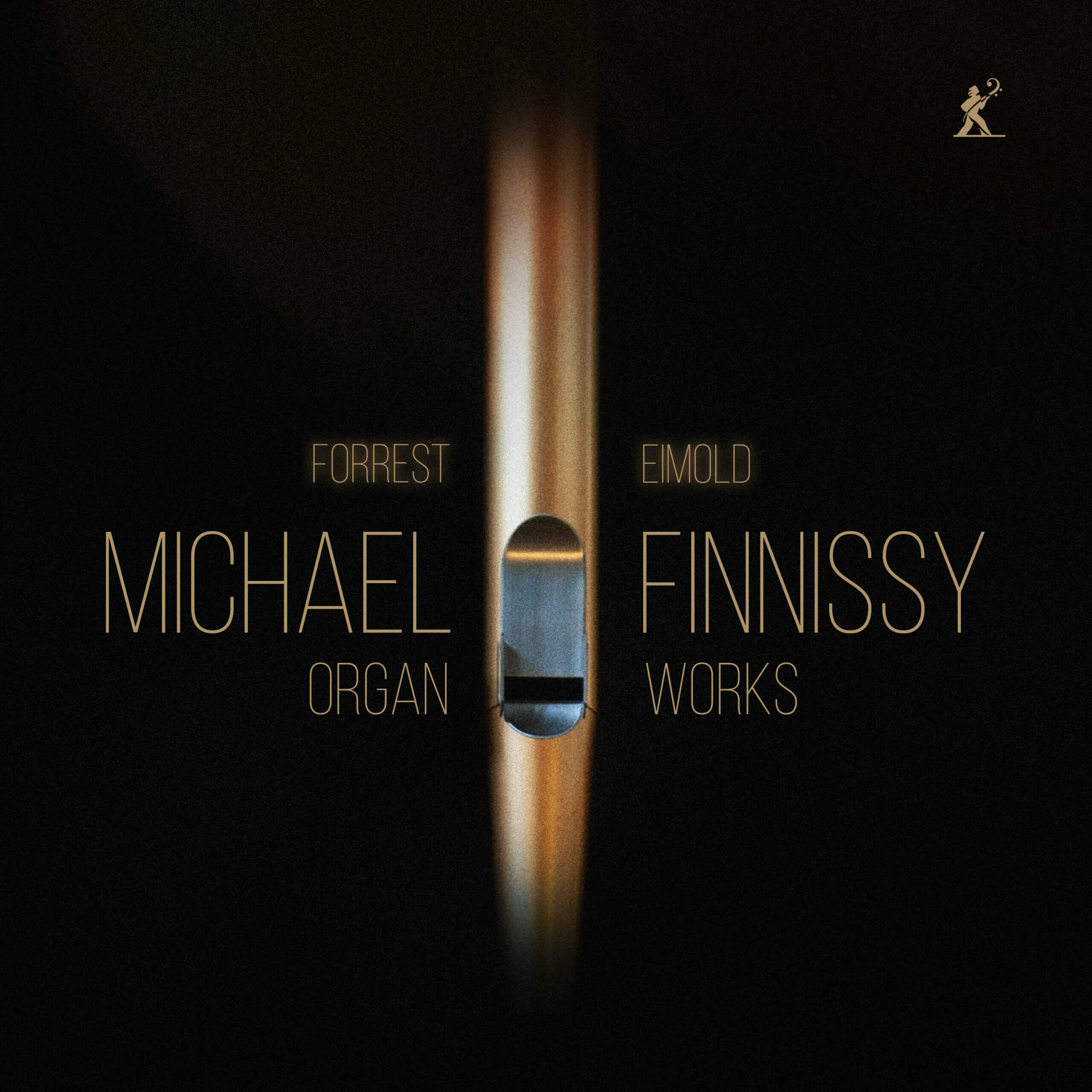
Hot on the heels of Ian Pace’s collection of Finnissy’s piano music on Divine Art comes this comprehensive survey of all the composer’s works for organ. If his writing for piano might be said to be characterised (in the main) by rapid, brittle and superlatively virtuosic figurations, Finnissy’s idiomatic approach to the organ concentrates primarily on the instrument’s unlimited powers of sustain, and its arsenal of colours.
Except for a few frenetic passages, these intriguing scores are largely measured and meditative; which does not, of course, mean that they are aural wallpaper. The composer’s kaleidoscopic imagination is everywhere apparent, not least in the equally variegated range of sounds to be heard here. It is a breathtaking release.
Two instruments are used: the 2012 Fisk & Gomes at Harvard University, and the magnificent Walker of Blackburn Cathedral, one of the UK’s finest, whose limpid sparkling flutes and piquantly fiery reeds receive a first-class and delightful showcase. From the general directions in the scores, the highly-accomplished Eimold has chosen his registrations with great fastidiousness, frequently partnering stops that could hardly contrast more than they do.
In the unusually generic piece of 1960s aleatoricism, Xunthaeresis (a ‘silly’ title, as the composer confesses), levity resulting from these abrupt juxtapositions appears to be part of the point; but, in general, the varied timbres simply mean that Finnissy’s often dense counterpoint is presented as clearly as possible. In addition to the vibrant mutations, with which the Walker is particularly well-endowed, the Positive division’s Cromorne and rasping 16’ Holzregal take no prisoners, although the mechanics are rather noisy at times. It would have been good to include the specifications in the booklet alongside Christopher Fox’s informative notes, but they are easily available online.
As Finnissy has long been captivated by music of different cultures, it is no surprise that his Hymn-Tune Preludes do not spring from The English Hymnal or from any of its unhappier successors, but are founded on Norwegian folksongs and the shape-note Sacred Harp worship from the American South. The sixth of these is particularly mellifluous, and a good starting-point for newcomers. The other shorter pieces comprise a fragment of incidental music from Macbeth, and a quietly austere tribute to the historical weaving industries in the nominal city, in which a melancholy aria from Handel’s Joshua sighs among the clattering looms.
But the rich sequence of Organ Symphonies occupies most of these well-filled and cleanly-recorded discs, in which allusions to Vierne and Langlais (among others) are starting-point for Finnissy’s comprehensive journeys. The most neo-Baroque is the fourth Symphony, whose opening fragment of Bach evolves into an agonisingly moving statement, as if Graham Sutherland’s Crucifixion had been translated into sound.

@divineartrecordingsgroup


![🎧 Listen now to the @purcellsingers' first single from their upcoming album, #ASpotlessRose! ➡️ listn.fm/aspotlessrose [in bio]](https://scontent-dfw5-2.cdninstagram.com/v/t51.71878-15/642752592_1424641949105789_8815810652567824072_n.jpg?stp=dst-jpg_e35_tt6&_nc_cat=106&ccb=7-5&_nc_sid=18de74&efg=eyJlZmdfdGFnIjoiQ0xJUFMuYmVzdF9pbWFnZV91cmxnZW4uQzMifQ%3D%3D&_nc_ohc=iGIrDXgtiUoQ7kNvwHMvzFM&_nc_oc=AdmACs9d57qQ8bzWtb1A0SVSsbJ8xDFRYT5G_f7sR1O4e7fF1V6WGQ0g3JJyQBaA5XE&_nc_zt=23&_nc_ht=scontent-dfw5-2.cdninstagram.com&edm=ANo9K5cEAAAA&_nc_gid=uphgbTtQ1Ex764Ch1iZWyQ&_nc_tpa=Q5bMBQH3mqvB1XV9DFRIYDw5pANS6CHH32wPjJ1rqMmZGbYQ5ZgVBcB4DY1ZM1TE5EsRsk7C1ONwZrQQTg&oh=00_AfzVBA1asROA2oezS3FzdF1ulpzuRjSzbB2Eikgl1xJ7Og&oe=69B13F41)


