







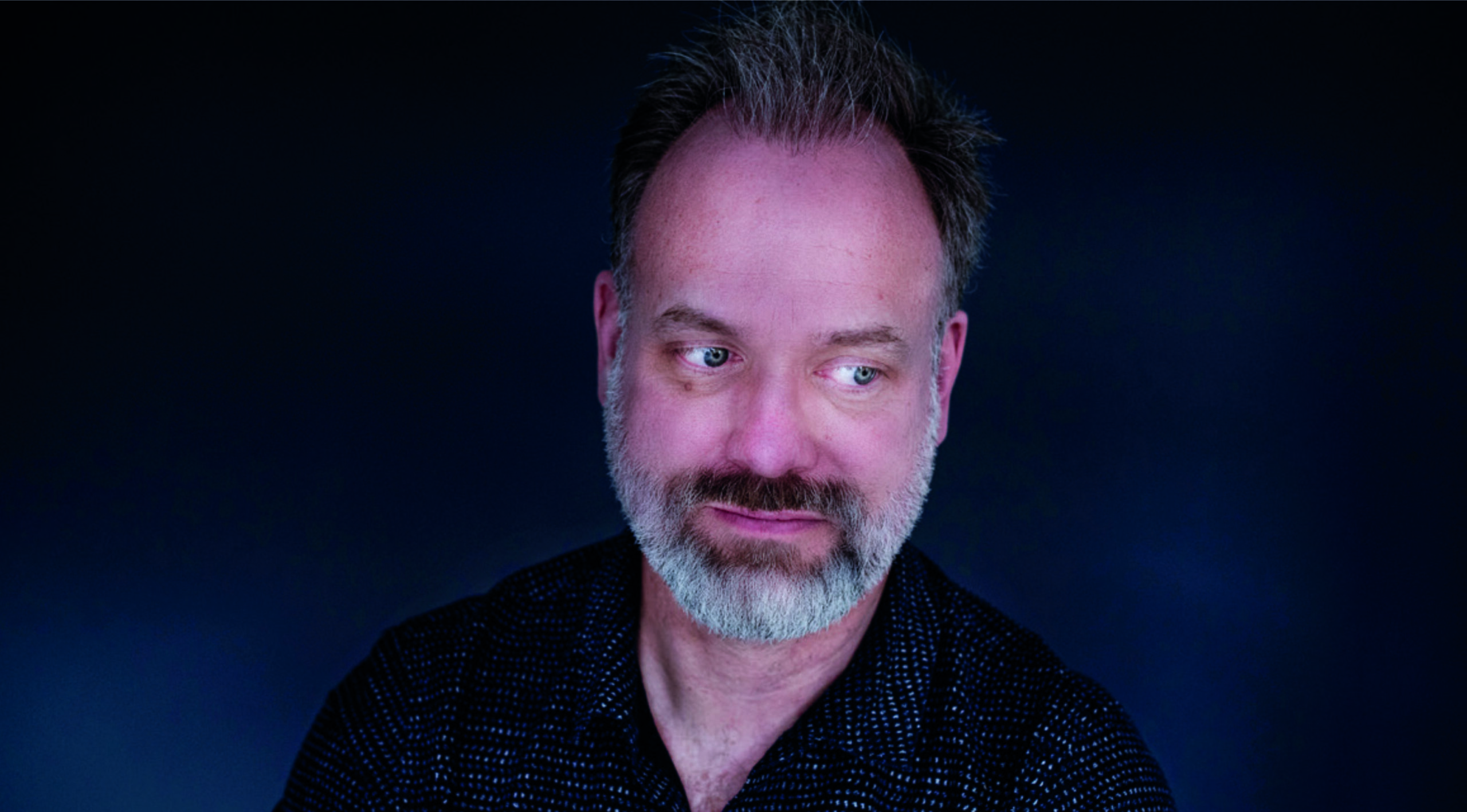
Born in London in 1971, Joby Talbot is a leading composer for concert, stage, and screen.
Talbot has written widely for voice and choir, setting poetry and sacred and historical texts for varying ensembles. The Wishing Tree (2002) passes the lines of contemporary Scottish poet Kathleen Jamie’s short poem between six solo male voices, while The Song of Wandering Aengus (2026) sets W. B. Yeats’ celebrated poem for choir. A Sheen of Dew on Flowers (2018) explores the meaning and history of Queen Victoria’s sapphire and diamond coronet in a setting of eight poems, written by women across different cultures over three thousand years and translated by Jane Hirshfield, for mezzo-soprano, baritone, choir, and orchestra. Piedra de Sol (2026) is Talbot’s first work based on a modern language other than English, following the dreamlike flow of Octavio Paz’s circular poem, while Path of Miracles, also for a cappella choir, describes the ancient Christian pilgrimage route to Santiago de Compostela through a collage of sacred, medieval, and original texts assembled by poet Robert Dickinson, whose various languages and tones reflect both the diversity among pilgrims and the experience of pilgrimage itself. Talbot has also set the traditional liturgical texts Ave Verum Corpus(2006) and Magnificat and Nunc Dimittis (2022) for choir and organ.
Prominent within Talbot’s catalogue are his works for stage and screen. His operas Everest (2014) and The Diving Bell and the Butterfly (2020) both explore themes of love and endurance, while his collaboration with leading choreographer Christopher Wheeldon has produced original full-length narrative ballet adaptations of Alice’s Adventures in Wonderland(2010), The Winter’s Tale (2013), Like Water for Chocolate (2021), and the life of Oscar Wilde (Oscar, 2024). Talbot has also scored the major feature films The Hitchhiker’s Guide to the Galaxy (2005), Sing (2016), Sing 2 (2021), and Wonka(2023).
Recordings
No posts were found.
Works List:
- Piedra de sol