








The tradition of male choral singing holds special significance in Estonian culture and in the work of Eduard Tubin, who entrusted to it both evocations of his native landscape and the pain of war and exile.
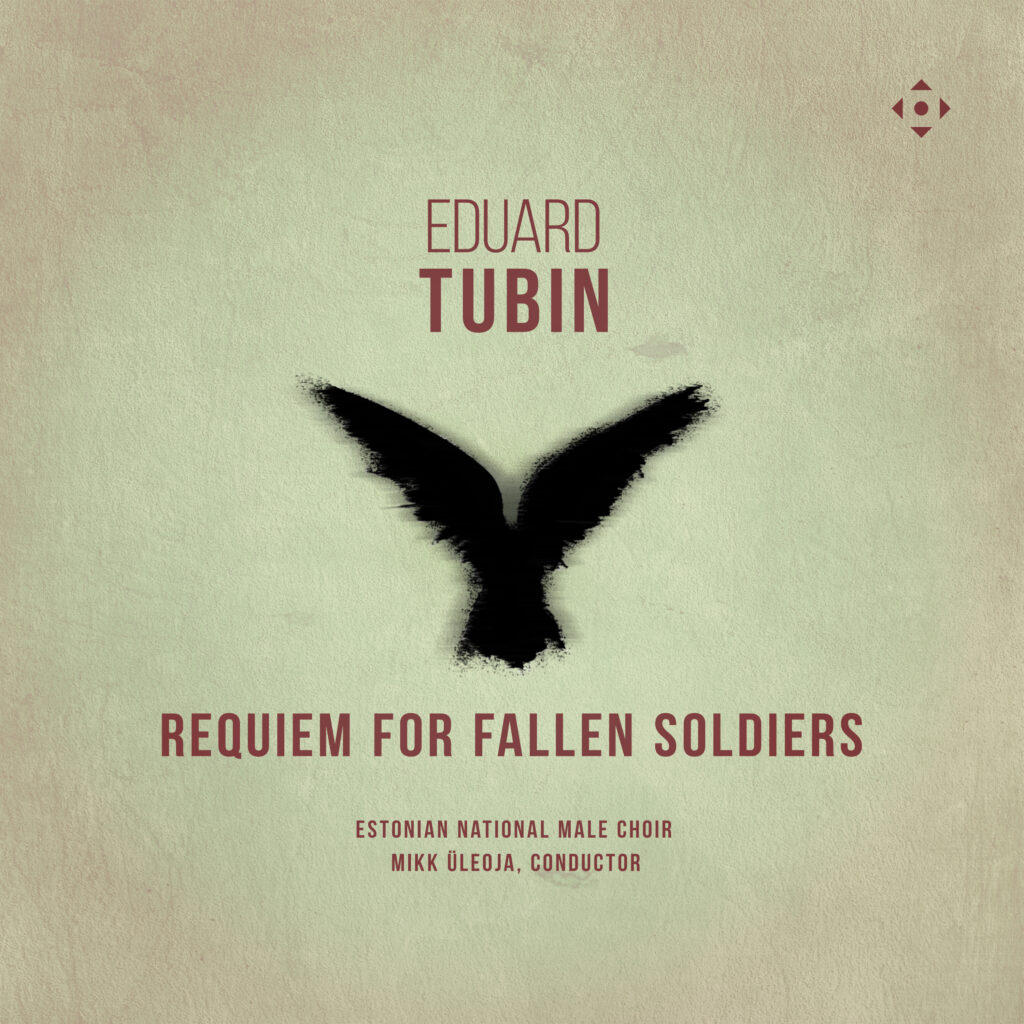
The album Requiem for Fallen Soldiers, released by Divine Art, presents pieces from different periods along with two large-scale compositions, performed by the Estonian National Male Choir conducted by Mikk Üleoja.
Tubin’s familiarity with this genre stemmed from his work as a choral conductor, first in Tartu and then, after fleeing his country in 1944, in Stockholm. This continuity had a profound cultural impact: for the expatriate community, singing in their own language preserved ties to their homeland and strengthened their sense of belonging.
The short pieces link images of nature with inner life. Karjase laul (“Shepherd’s Song”), set to a folk text, and the compositions based on poems by Ernst Enno evoke longing and solitude. This concision demands a precise relationship between word and musical phrase, rich in dynamic gradations and contrasts of register. The works written in Sweden extend these references from a distance, lending memory a renewed intensity.
Taganejate sõdurite laul (“Song of the Retreating Soldiers”), on a poem by Uku Masing, introduces the tragic dimension of the conflict and shows the vulnerability of a youth scarred by violence. This perspective broadens in Reekviem langenud sõduritele (1979), which replaces the liturgical text with verses by Marie Under and Henrik Visnapuu. Its five movements connect collective commemoration with individual grief (the funeral, a mother’s suffering) and culminate in a return of the opening text that gives the work its unity.
The Requiem’s scoring combines the male voices with mezzo-soprano, trumpet, percussion and organ: the soloist gives the lament an individual voice, while the instruments heighten its ceremonial and dramatic character. Iris Oja, Indrek Vau, Madis Metsamart, Anto Õnnis and Piret Aidulo complete the ensemble with precise, sensitive and expressive performances.
Between the intimacy of the miniatures and the solemnity of the Requiem, the programme reveals the expressive breadth of Tubin’s writing and his affinity with Estonian poetry. The sung word thus acquires a power that encompasses both the most inward contemplation and the denunciation of human devastation.
—Josep Bosch